Kai Friedrich · 28 September 2026
Sensor-Driven Flow Optimization Reshaping Wool Scouring Efficiency Across Regional Processing Hubs
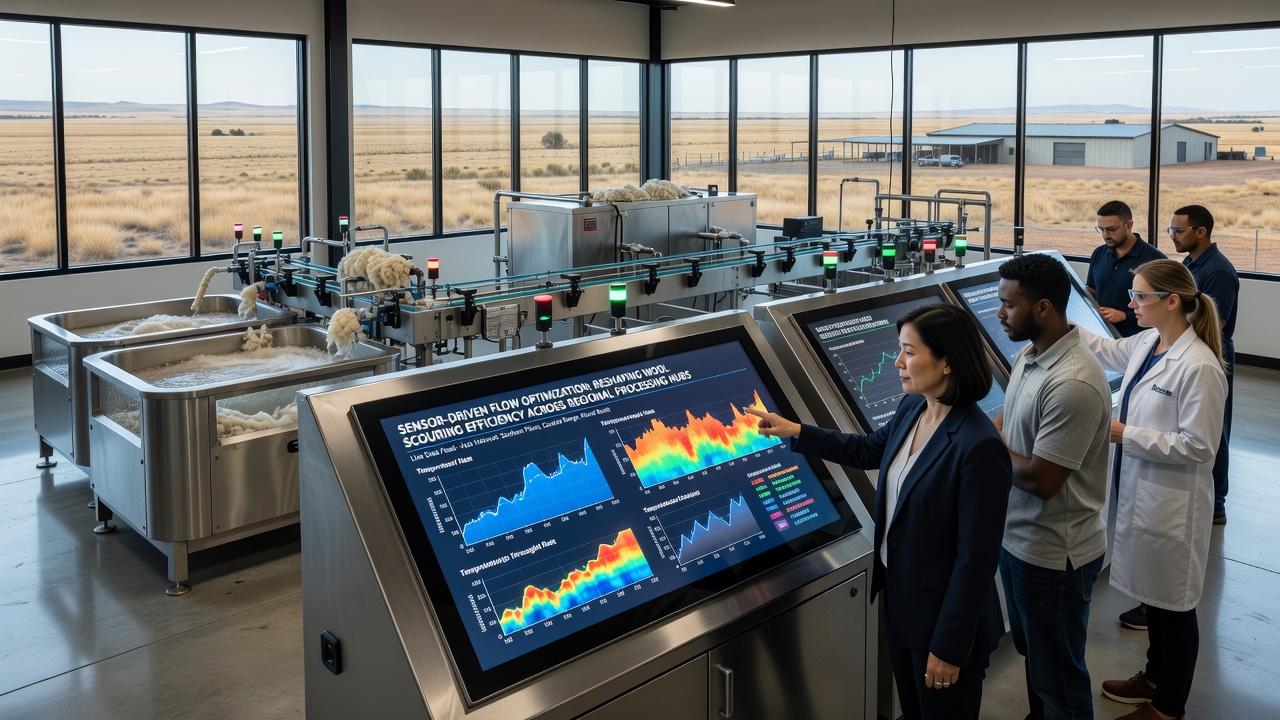
Regional wool processing hubs have integrated sensor arrays into scouring lines where raw wool undergoes cleaning through controlled water, detergent and temperature sequences, and these systems track flow variables in real time to adjust pump speeds and valve positions. Data streams from inline sensors feed directly into programmable logic controllers that recalibrate delivery rates every few seconds based on wool throughput measurements, which allows facilities to maintain consistent contaminant removal while cutting excess water consumption. Observers note that this approach differs from older fixed-rate systems because it responds to incoming wool variability such as grease content and fiber density detected at the intake stage.
Core Mechanisms Behind Flow Adjustments
Ultrasonic and electromagnetic sensors measure both volumetric flow and turbidity levels within scouring bowls, then transmit readings to central software that calculates required adjustments for each stage of the process. When turbidity rises above set thresholds the system increases rinse water volume momentarily before tapering it back, whereas lower readings trigger reduced flow to conserve resources without compromising fiber cleanliness. Studies conducted across multiple sites show that such dynamic control reduces average water usage per ton of wool by measurable margins while preserving the target residual grease levels specified by downstream textile standards.
Regional hubs in Australia, New Zealand and parts of South America adopted these setups at different scales during the past decade, with larger operations installing multi-point sensor networks that cover every scouring bowl and rinse section. Smaller facilities often begin with targeted installations at the first scouring stage where the greatest flow variations occur, then expand coverage after initial performance data confirms savings. Equipment suppliers report that retrofits typically involve minimal line downtime because sensors mount externally on existing piping and connect through standard industrial protocols.
Performance Data Across Multiple Hubs
Figures compiled from operational logs indicate that optimized lines achieve steadier detergent concentration profiles because flow corrections prevent over-dilution during high-volume runs. One processing cluster in southern Australia documented a 14 percent drop in energy required for water heating after sensors began modulating hot water input according to real-time demand rather than preset schedules. Similar patterns appear in New Zealand facilities where seasonal wool supply fluctuations previously caused frequent manual interventions; automated adjustments now handle those swings without operator input at each change.
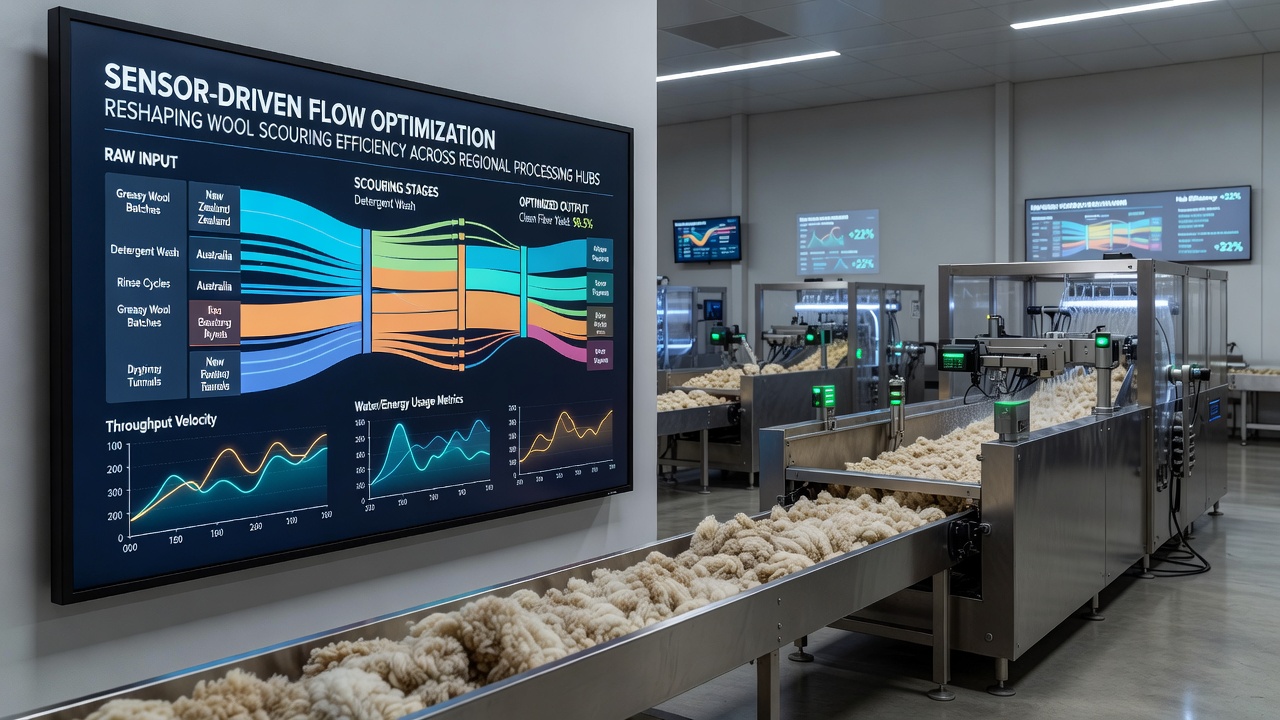
Researchers tracking efficiency metrics across six regional sites found that sensor-guided systems also lowered chemical carryover into wastewater streams, easing load on downstream treatment plants. The same reports note that fiber length distribution after scouring remained within acceptable tolerances, confirming that aggressive flow reductions did not translate into under-cleaned batches. Data from the Food and Agriculture Organization of the United Nations aligns with these observations by highlighting parallel trends in water stewardship within fiber processing industries worldwide.
Regional Hub Adaptations and Timelines
Processing centers located near major sheep farming districts benefit most from localized sensor networks because shorter transport times deliver wool with more consistent initial moisture and contaminant profiles, allowing tighter control setpoints. In September 2026 several hubs completed phased upgrades that linked individual line sensors into shared supervisory systems, enabling cross-comparison of performance benchmarks between neighboring facilities. This integration revealed that certain wool types respond better to slower initial scour flows followed by accelerated rinse stages, prompting schedule refinements that further improved throughput without additional resource inputs.
Hub managers coordinate with equipment technicians to calibrate sensor drift periodically because mineral deposits from hard water sources can affect measurement accuracy over months of continuous operation. Calibration routines now incorporate automated self-check sequences that flag anomalies before they influence flow decisions, reducing unplanned maintenance events. Those who oversee daily operations report that the combination of sensor data and historical batch records supports predictive scheduling, allowing hubs to align maintenance windows with lower wool intake periods.
Supporting Research and Broader Context
Academic groups affiliated with agricultural research institutions have published findings on how flow optimization interacts with wool fiber properties, including studies that quantify changes in residual suint and vegetable matter after sensor-controlled processing. Results from these investigations appear in industry journals and contribute to updated best-practice guidelines circulated among regional associations. Cross-referencing with data from CSIRO shows consistent alignment between laboratory-scale trials and commercial outcomes once sensor calibration accounts for local water chemistry variations.
Conclusion
Sensor-driven flow optimization continues to spread through wool scouring operations at regional hubs because measured improvements in water, energy and chemical metrics provide clear operational advantages. Continued refinement of sensor placement, data integration and calibration protocols supports further gains as facilities accumulate longer performance histories. The approach demonstrates how targeted instrumentation can address resource efficiency while meeting the quality requirements of subsequent textile manufacturing stages.