Clara Krause · 9 November 2026
Adaptive Responses of Diversion Components to Variable Fiber Moisture Levels in Cooperative Collection Centers Located in Subtropical Zones
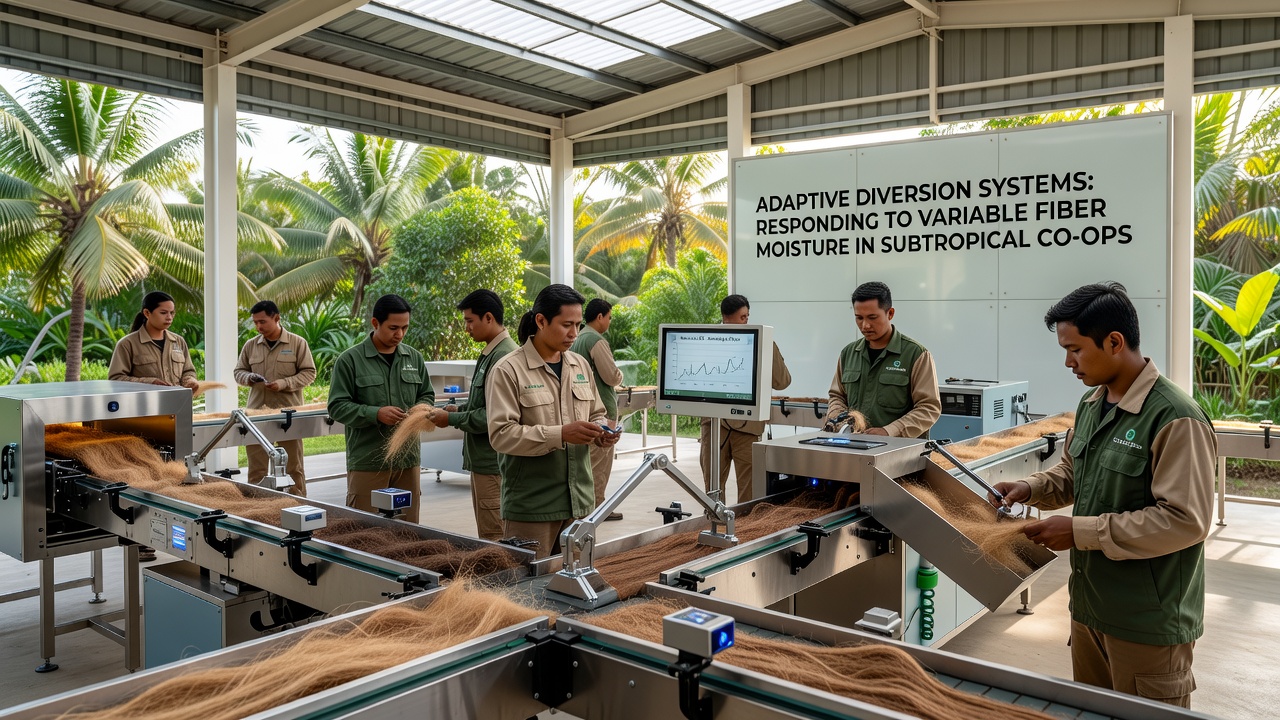
Cooperative collection centers in subtropical zones manage incoming fiber shipments where moisture content shifts rapidly because of seasonal humidity patterns and rainfall cycles, and diversion components such as automated valves and flow separators adjust their operational parameters to maintain fiber integrity during intake and sorting stages. These adjustments occur through sensor feedback loops that detect moisture percentages in real time, allowing mechanical gates to redirect batches toward drying stations or direct processing lines depending on the readings recorded at the intake conveyors.
Climate Influences on Fiber Moisture
Subtropical regions experience pronounced wet and dry periods that affect stored and freshly delivered fibers, with relative humidity often exceeding 70 percent during monsoon transitions and dropping sharply in cooler months. Observers note that fiber arriving from surrounding farms can carry moisture levels between 12 and 28 percent by weight, and diversion components must respond within seconds to prevent clumping or mold development inside holding bins. Data collected through November 2026 from multiple centers shows consistent spikes in moisture after heavy afternoon storms, prompting valve actuators to increase opening angles and route higher-moisture loads away from primary scouring equipment.
Researchers tracking these patterns have recorded that centers positioned near coastal zones register faster moisture uptake compared with inland facilities, yet both types rely on the same core diversion hardware calibrated for local conditions. The hardware incorporates corrosion-resistant alloys and sealed electronics that withstand the ambient temperatures ranging from 18 to 34 degrees Celsius typical in these latitudes.
Mechanical Design of Diversion Components
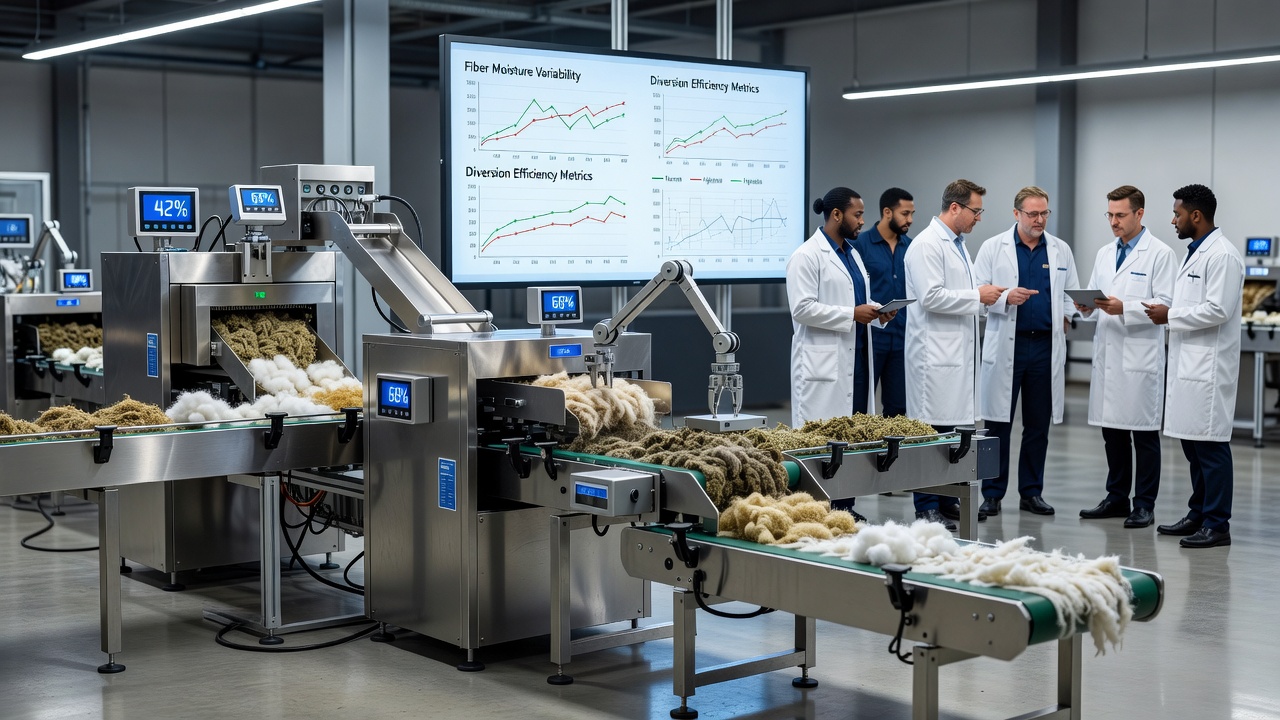
Diversion components consist of pivoting gates, pneumatic diverters, and variable-speed augers integrated into modular frames that fit existing conveyor layouts at cooperative sites. Each unit features embedded capacitive moisture sensors paired with microcontrollers that compare incoming data against preset thresholds calibrated for wool, alpaca, and other natural fibers processed in the region. When readings surpass established limits, the system triggers solenoid valves to shift gate positions, sending the batch along an alternate path equipped with additional airflow or heating elements.
Studies conducted across cooperative networks indicate that these responses reduce average processing downtime by measurable margins because operators no longer need to halt entire lines for manual sorting. Maintenance logs from facilities operating since early 2025 reveal that the sealed bearing assemblies and self-cleaning sensor surfaces extend service intervals even under constant exposure to humid air and fiber dust.
Operational Data and Performance Metrics
Performance records compiled from centers in multiple subtropical districts show that adaptive diversion cycles activate between 14 and 22 times per eight-hour shift during peak humidity months. Throughput measurements demonstrate that redirected batches reach target moisture levels 18 to 25 percent faster than non-diverted material, while overall fiber quality metrics remain within industry specifications set by textile buyers. Figures released by regional agricultural agencies confirm that centers adopting these systems report lower rejection rates at downstream mills because early moisture control limits fiber degradation.
One installation in a major collection hub integrated additional pressure sensors along the diversion paths, allowing finer adjustments to gate velocity and reducing mechanical stress on the components themselves. This configuration, documented in operational reports, sustained continuous runs exceeding 120 hours without recalibration even when external humidity fluctuated by more than 15 percent within a single day.
Integration With Cooperative Workflows
Cooperative staff coordinate with automated diversion systems through centralized dashboards that display live moisture maps and predicted diversion events based on weather forecasts. Training programs emphasize interpretation of sensor alerts rather than manual overrides, and records indicate that operator intervention has declined steadily since the hardware upgrades completed in late 2025. External verification from industry groups such as the CSIRO wool research division highlights how these coordinated workflows align with broader traceability standards required by export markets.
Centers also exchange performance data through regional networks, enabling comparative analysis of valve response times across sites with differing microclimates. Such sharing supports iterative refinements to threshold settings without requiring physical hardware changes at every location.
Conclusion
Cooperative collection centers in subtropical zones continue to refine diversion component responses as moisture variability remains an inherent operational factor. Sensor-driven gate adjustments, material durability improvements, and integrated data systems together form the practical framework that keeps fiber moving efficiently from intake to processing stages. Ongoing records through late 2026 demonstrate measurable consistency in output quality when these adaptive mechanisms operate within established parameters.